There was a case for spending it. It was not stupid.
Britain struck oil in the North Sea in the late 1960s. The real money began to flow through the late 1970s and the 1980s - which is to say, it arrived in the middle of an emergency. Whole industries were closing. Unemployment ran into the millions. A government facing that does not weigh the welfare of Norwegians in 2026. It weighs the household in front of it, this year, that needs the money now. Spending oil revenue on unemployment support and tax cuts during a real crisis is not obviously wrong. Money kept from a family in a recession, so a fund can compound for citizens who cannot yet vote, is a real cost too - just a quieter one. And Norway was not Britain. A far smaller population meant a much bigger windfall per head, and there was no industrial collapse to cushion. Hindsight never faced the fire.
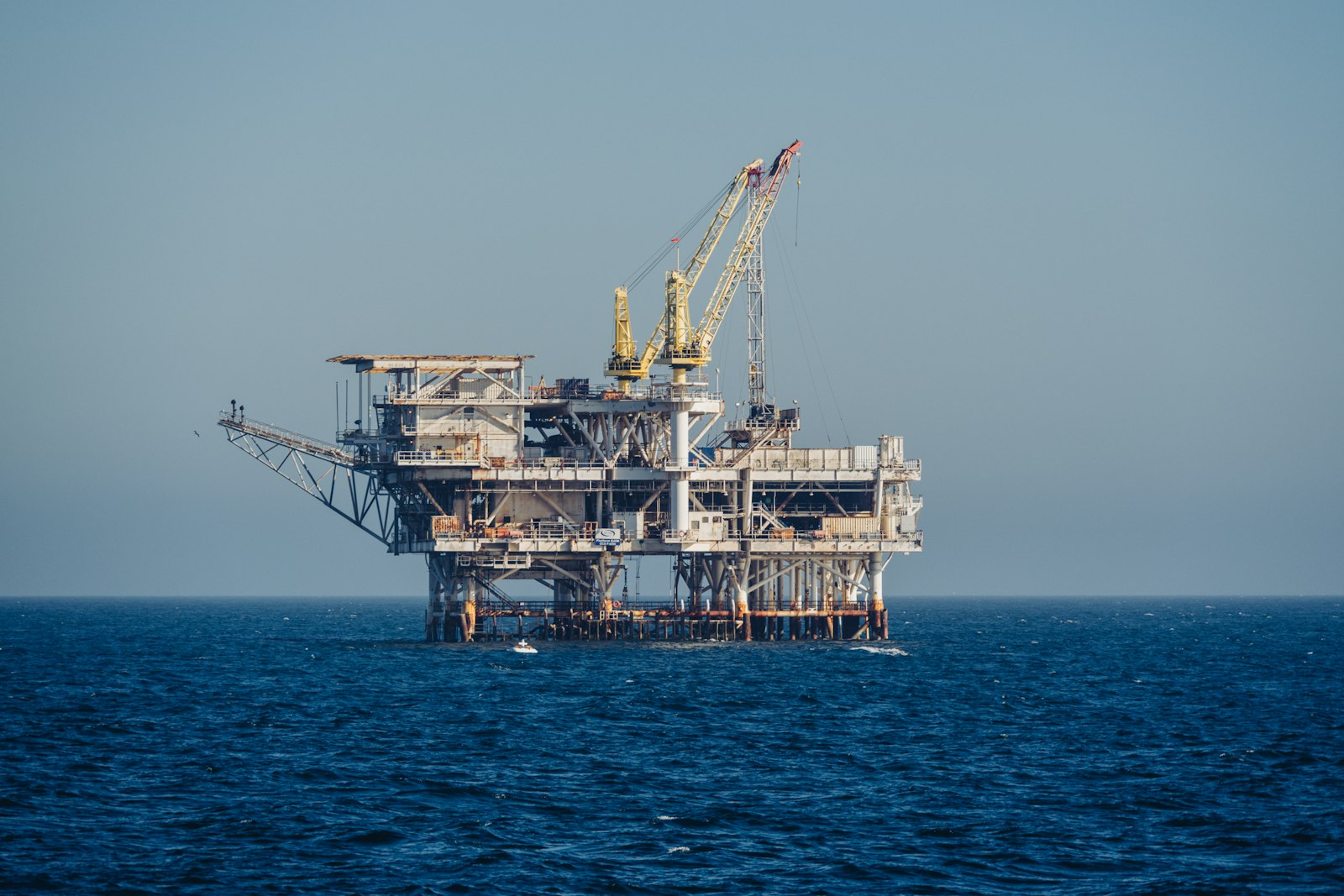
All of that is true. What differed was not the pressure. Both countries had their own. What differed was the rule.
Two countries, one sea, two answers
Norway put its petroleum revenue into a fund: the Government Pension Fund Global, run at arm's length by Norges Bank Investment Management. The first money went in in 1996. It now holds more than two trillion US dollars. That makes it the largest sovereign wealth fund in the world, and it owns, on average, about 1.5 per cent of every listed company on earth (Norges Bank Investment Management, 2026). For a country of five and a half million people, that is roughly three hundred thousand dollars each. Norway's assets dwarf its debts. It can absorb a shock most states can only envy.
Britain has no such fund, because Britain built no such fund. The tax was collected - four separate levies on North Sea profits, a record HMRC has kept since 1968. And it was spent as it arrived, as ordinary government income. In the mid-1980s those receipts hit about twelve billion pounds in a single year, over three per cent of national income at the time, and touched a cash record again around 2008 (House of Commons Library, 2026; Office for Budget Responsibility). The money was real, and it was large. It is also gone, the way current spending is always gone. It paid for the year it was collected in. It left nothing behind with its name on it.
The rule, not the virtue
It is tempting to make this a story about Norwegian prudence and British recklessness - a matter of national character. That reading is comforting, and it is wrong. Resist it, because the useful account has no hero in it.
Norway did one thing Britain did not. It built a rule, and a box to keep the money in. The fund is the box. The rule, adopted in 2001, is that the state may spend only the fund's expected real return, never the capital. That figure was set at four per cent, then lowered to three in 2017 (Norwegian Ministry of Finance). A rule like that is not moral. It is structural. It makes saving the default and spending the exception a politician has to stand up and argue for. Britain never built the box, so the default ran the other way. Spending was automatic. Saving was the case nobody had a reason to make. Give any country that second arrangement and it will spend the windfall, whoever is in charge. The Norwegians were not better people. They were better organised, once, at the start. The organisation did the rest.
That is the part that generalises. It is why this is not only a lament about oil.
What is left, and what is not
Be honest about the present. The window Norway walked through is mostly shut for the North Sea. Production peaked in 1999 at around 4.5 million barrels of oil equivalent a day. By 2024 it had fallen to roughly 1.1 million (North Sea Transition Authority). The basin is old. The remaining reserves are a fraction of what has already been pumped. A fund started on today's diminished flow would be a modest thing beside Norway's. Anyone selling "build the Norwegian fund now" as if 1975 were still on the table is selling the wrong decade. On the oil itself, the verdict is plain: it is largely too late.
But the real lesson was never about oil. It is about the default a country sets for windfalls. And windfalls keep coming - asset sales, spectrum auctions, one-off receipts of every kind, and yes, the tail of the North Sea. Britain still has no standing rule that catches any of them. Each one arrives, gets folded into the year's spending, and vanishes exactly as the oil did, for exactly the same reason. No box. No rule. Saving as the argument nobody wins.
So the failure was never a single wrong call in the 1980s. It is the ongoing absence of a mechanism that takes the choice out of the politics of the moment - the one thing a windfall, by its nature, tempts a country to keep for the moment. Norway assumed the money would end, and built for the end. Britain assumed it would not. Britain was wrong, and the assumption is quietly still in place. The oil is a closed case. The habit is not.
An opinion of the house. The argument is ours; the record beneath it belongs to no one.
How this piece was made
House opinion piece, written to the steelman-first standard. The case for spending the revenue is put at full strength first and largely conceded: the money arrived during a real industrial crisis, a windfall withheld from families in a recession is itself a cost, and Norway's far larger per-head windfall and absence of a comparable collapse make the comparison imperfect. The turn is deliberately structural and refuses a villain - the difference is a fiscal rule that made saving the default, not Norwegian virtue against British vice. A decision is made and confidence is graded out loud: high that a rule versus no rule is the mechanism; low on any claim that Britain could now replicate Norway's outcome from the North Sea, which the piece states is largely too late.
Every number was re-sourced from primary or official records rather than the founder corpus, which is unverified. Fund value and holdings: Norges Bank Investment Management (2026). The fiscal rule's history: the Norwegian Ministry of Finance - and note the corpus had it backwards, stating "3% now 4%", when the rule was set at 4 per cent in 2001 and lowered to 3 per cent in 2017. UK receipts: the House of Commons Library briefing on North Sea taxation (May 2026) and the OBR. Production: the North Sea Transition Authority (1999 peak; 2024 figure). The per-head figure is explicit arithmetic - fund value divided by population - not a cited statistic, and is flagged as an approximation.
What a critic should check: that the peak-year receipt figures are cash rather than real terms (they are cash); whether "largest sovereign wealth fund in the world" still holds against Gulf funds on every measure; and whether the structural argument over-credits the rule against Norway's genuinely different starting position - a point the piece concedes rather than leans on.
What do you think?
Sign in — it's free to add your take, reply, and vote on others.
No takes yet. Be the first to make the argument.
The record stays free. If it was worth your time, buy us a coffee - or become a member for the commentary and the weekly.